
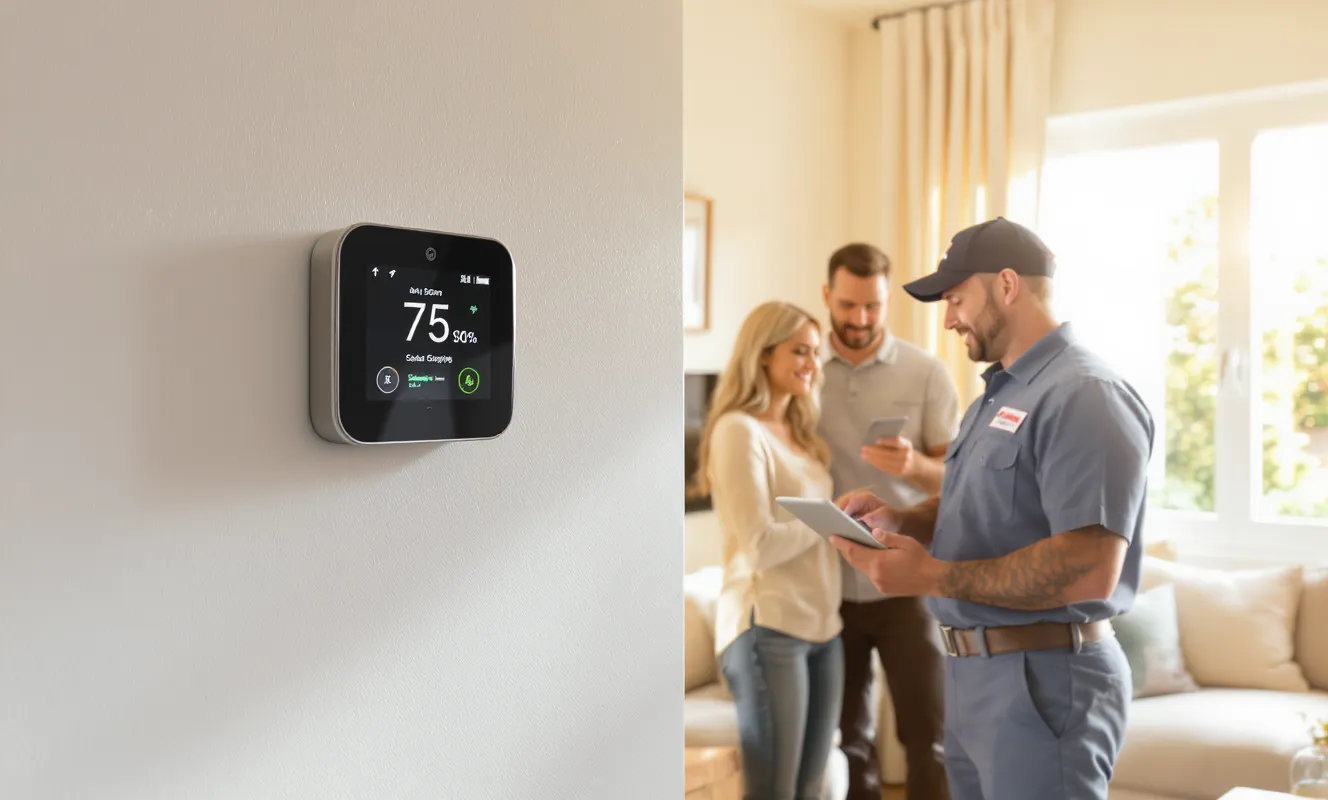
The thermostat fight hits different in Bee Cave, because there are usually two or three thermostats to fight over — and a September electric bill that reflects every degree of every argument, multiplied across systems big enough to cool a small restaurant. So let's settle it with numbers instead of vibes: there's a defensible temperature range for Hill Country summers, a zone strategy that most multi-system households never fully use, and a set of tricks that make 76 feel like the 72 somebody in your house keeps demanding.
The famous 78°F efficiency guidance optimizes grids, not households; the real-world corridor lives at 72–76 when home. The engineering answer is the warmest setting your household genuinely stops noticing, because the cost curve compounds: every degree below 78 adds roughly 3–5% to cooling costs — per system. In a house running three five-ton systems from May through September, the difference between a 72 house and a 76 house isn't latte money; over a Bee Cave summer it's commonly hundreds of dollars, sometimes more with pool pumps and EV charging already stacking the meter. The play isn't suffering at 78 — it's engineering warmth tolerance with the tools below.
Uniform setpoints across a 4,000-square-foot house is the most expensive default in the corridor. The better playbook: occupied zones at comfort (74–76 with fans), guest wings, bonus rooms, and formal spaces parked 3–5 degrees warmer until needed, and sleep zones on their own night schedule instead of dragging the whole house cold at 10pm. Two cautions from the service side: don't fully shut vents or set extreme gaps between adjacent zones (pressure imbalance and shared-wall losses eat the savings), and remember that "off" isn't a summer setting for any zone in this climate — an uncooled, unventilated wing bakes its contents and feeds humidity back to the rest of the house. Three to five degrees of strategic neglect is the sweet spot.
That's usually diagnosable — dampers, duct balance, or a tiring system. Beaver matches Bee Cave homeowners with a licensed, vetted AC pro, price quoted before any work.
Ceiling fans are worth 2–3 degrees — counterclockwise, medium-high, and off in empty rooms, because they cool skin, not air. The corridor's tall great rooms were built for big fans; use them and the 73-with-still-air crowd discovers 75–76 feels identical.
West glass is the afternoon tax. Bee Cave's signature view walls are also its signature heat load. Solar shades or closed blinds on western exposures by noon buy back 1–2 degrees of afternoon comfort free — and relieve the exact system, at the exact hour, most likely to be losing the battle.
Humidity is half of comfort. Lake-adjacent mugginess makes 75 feel swampy; dry spells make 78 fine. Healthy, correctly sized systems dehumidify as they cool — oversized ones cool fast, shut off early, and leave rooms cold and clammy. If sticky-at-every-setting is your summer, that's a sizing/airflow/charge diagnosis, not a preference dispute.
The catch-up myth — "it works harder to recover than it saves" — is the most expensive folklore in HVAC. Heat enters the house proportionally to the indoor-outdoor gap; a warmer house all afternoon absorbs less, and recovery costs less than the runtime avoided. Corridor playbook: back off 7–10 degrees when away, trimmed to 4–6 during 100°+ stretches so recovery doesn't stretch past arrival. Smart thermostats automate it per zone — including geofenced pre-cools — and in a multi-system house they're the rare gadget with months-scale payback, because they end the human error of three stats set by three moods.
Night: sleep science likes 68–72; August bills don't. The compromise: sleep zones at 74–76 with bedroom fans (reads like low 70s on skin), pre-cooled an hour before bed rather than crash-cooled at 10pm, drifting up in the pre-dawn hours while the rest of the house sits warmer all night. Away hours: let the setback work. Vacation: 80–83, never off, on every zone. A sealed house with no AC in July stresses drywall, electronics, pet margins, and — the quiet one — humidity, since nothing dehumidifies while the house bakes. Eighty-ish holds the line for a fraction of occupied cost, and the airport pre-cool is one app tap.
On genuine scorchers, a healthy system holding a 20–25 degree gap from outdoors while running nearly continuously is performing to design. The diagnostic signal is change: the west-zone system that held 74 last August and can't find 77 this one has lost capacity — charge, coils, blower, or duct leakage — and it's cheapest to fix at the annoying stage. Escalation path: the warm-air guide for free checks, the 2026 cost guide for prices, and a per-system shoulder-season tune-up as the standing prevention.
Corridor-specific footnote: detached and semi-detached spaces — casitas, pool houses, garage gyms on mini-splits — deserve their own rule. Mini-splits sip power at steady setpoints and hate being toggled; park them at 78–80 unoccupied and drop them on arrival (they recover fast in small spaces). What kills their efficiency is the same thing that kills the main house's: filters nobody remembers and condensers buried in landscaping. Put every outbuilding head on the same monthly filter rhythm as the main returns, and the whole property's summer bill behaves better than the square footage suggests.
Central Texas summers now include conservation-appeal afternoons, when the grid asks everyone to ease off between roughly 3 and 7pm. Multi-system houses are actually built for this: pre-cool every zone 2–3 degrees through the early afternoon while supply is comfortable, then ride the peak window on banked thermal mass with setpoints a couple degrees higher. Well-insulated corridor builds coast through barely noticing; leaky ones write their own weatherization business case. On time-of-use electric plans the same maneuver is a monthly strategy, not just a civic one — cooling banks cheapest exactly when the grid wants it banked, and three systems bank a lot of thermal mass.
Honesty section, because setpoint guides love to overpromise. No schedule fixes leaky attic ducts (you're cooling the attic), clogged filters (airflow is the ballgame), an oversized system's clammy short-cycling, or the west room that was never balanced right. Strategy stacks on a healthy system; it doesn't substitute. The encouraging part: each of those problems announces itself through the patterns above — sticky comfort, growing afternoon gaps, one stubborn zone — and each is a routine, priceable fix in the cost guide. And when replacement time comes, variable-speed equipment — increasingly standard in 2026 installs — holds zones within a fraction of a degree while dehumidifying continuously; upgrading households routinely find themselves comfortable two degrees warmer than their old setpoint, which quietly ends the thermostat war by dissolving it.
Last word on the family fight: the number was never the argument. Comfort is temperature plus humidity plus airflow plus expectation, and a tuned multi-system house with managed sun makes 76 feel like the 72 everyone lobbied for — at a September-bill difference you can actually see. Set the zones, automate the schedule, and spend the savings on the good biscuits.