
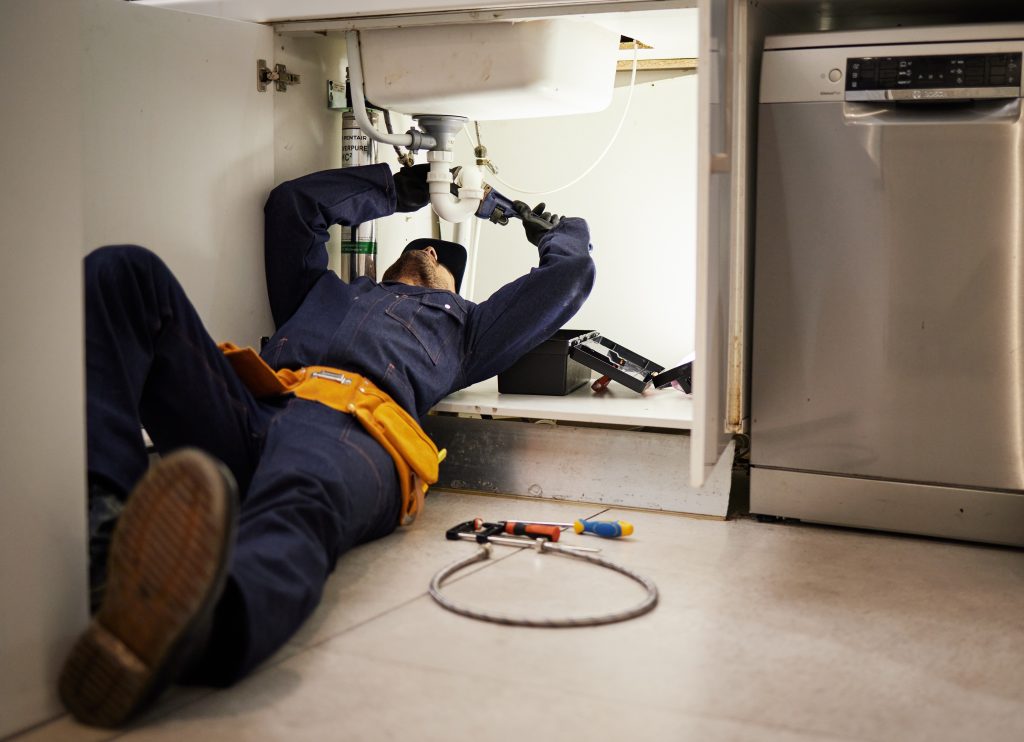
Bee Cave plumbing bills read differently than the metro average, and not because the wrenches cost more west of the 71 junction. The houses are bigger (more bathrooms, longer pipe runs), the fixtures are nicer (a cartridge for a designer shower valve can cost what an entire builder-grade faucet does), and the local water and pressure conditions generate their own service categories. Here's what plumbing work actually runs in 2026, tuned to this zip code.
The area's licensed plumbers bill $100–$200 an hour or by flat-rate task, with a $50–$100 trip fee for diagnosis that's typically credited against completed work — confirm that word "credited" up front. Bee Cave jobs tend to land in the upper half of metro ranges for an unglamorous reason: scale. A three-and-a-half-bath house has more of everything to fail, the runs from street to fixture are longer, and access through finished, occupied square footage takes care and time. None of that is padding; all of it is physics.
Common jobs, installed by licensed pros: faucet work $150–$325 — but note the fixture asterisk below; toilet repairs $150–$350; disposal replacement $250–$550; drain clearing $150–$350; camera inspection $250–$500; pressure regulator replacement $250–$600 — a bigger category here than most places, because hillside static pressure makes PRVs both mandatory and mortal (they live about 10–15 years, and their failure announces itself as banging pipes or fixtures suddenly spraying like power washers); water heater swaps $1,500–$2,600 with the attic premium this housing stock usually pays (full breakdown here). Heavyweights: slab spot repairs $1,500–$4,000, repipes $6,000–$15,000.
Labor is only half a Bee Cave invoice; the other half lives in the fixture itself. Thermostatic shower systems, wall-mounted faucets, touchless kitchen sets — their internal cartridges and valves can run $80–$300 as parts, sometimes on order rather than on the truck, which converts a one-visit job into two. This isn't upsell; it's the maintenance tail of the finish-out the house came with. Two defenses: photograph the fixture and its brand before calling (a plumber who knows what's waiting brings the part), and when a designer fixture fails repeatedly, price its replacement against its repair — loyalty to a troublesome valve is a subscription.
Beaver matches Bee Cave homeowners with a licensed, vetted local plumber — free, with the price quoted and itemized before anyone touches a wrench.
The local limestone water writes its own line items: softener service and installs (worth pricing if the shower glass is frosting and appliances are aging fast), scale-seized shutoff valves that turn five-minute jobs into ninety-minute ones, and mineral-crusted aerators, cartridges, and fill valves failing on an accelerated schedule. When a plumber quotes a Bee Cave faucet job "assuming the angle stops cooperate," that's not hedging — that's experience with valves that haven't turned since the Obama administration. The batching advice doubles here: while a pro is on site, having them exercise and if needed replace crusty shutoffs is cheap insurance against the day you need those valves in a hurry.
After-hours work adds $75–$200 or an elevated trip fee, and response times stretch with geography — fewer trucks live out here than in the central grid. The high-leverage countermove: know the main shutoff (and teach the housesitter), because "water off, morning appointment" collapses the premium. In two-story houses with attic mechanicals, the second shutoff worth knowing is the water heater's own valve — the difference between a contained hiccup and a ceiling event while you wait for the truck. A $12 meter key and ninety seconds of family orientation outperform any emergency plumber's phone number.
Identical jobs draw bids 40–60% apart, decomposable as ever into overhead tier, licensing level, and inclusions. Bee Cave adds a wrinkle: builder-grade original equipment across whole subdivisions ages in unison, so shops that work these neighborhoods weekly know exactly which valve, which PRV, which heater is next — and that fluency is worth paying for, because the plumber who's replaced forty of your exact regulator quotes tight and works fast. Ask bidders whether they know your neighborhood's build years and typical equipment; the answer sorts them quickly. And insist every bid itemizes: parts and their tier, labor, and each add-on named. The bid that survives decomposition is the honest one.
Calibrate against two local lists. Cheaper than feared: most single-fixture repairs when the shutoffs cooperate, softener service on an existing unit, the pressure check that catches a dying PRV before it takes fixtures with it, and anything caught at drip stage. Pricier than hoped: work behind the stone and tile this housing stock loves (access, not parts, is the invoice), recirculation pump service on systems nobody's touched since the build, outdoor kitchen and pool-bath lines that run long and freeze first, and the compounding jobs — the seized valve that turns a faucet swap into a valve-and-faucet swap. The through-line: in a high-finish house, the finish is the cost driver. Budget by what surrounds the part, not the part — and when a bid seems high, ask what the plumber expects to fight through; the answer is usually the tile, not the margin.
Water heaters, gas work, repipes, and sewer lines need permits here as anywhere in the metro, and the handling charge on a quote is the cheap version of that cost — the expensive version surfaces at home sale, when unpermitted mechanical work meets a buyer's inspector and a title-company deadline in the same week. In a market where Bee Cave houses trade at Bee Cave prices, clean mechanical paper is part of the asset. Keep every itemized invoice; the file outperforms memory at both claim time and closing time.
Hold $150–$350 for ordinary calls, $250–$600 for regulators and mechanical middleweights, a fixture-parts premium wherever the finish-out is fancy, and four figures for heaters, slabs, and sewers. Batch small jobs into single visits, keep the shutoffs exercised and known, replace the PRV on schedule instead of after the bang, and demand itemization everywhere. The metro's plumbing prices aren't negotiable, but how much plumbing you consume — and at which hour of the day — very much is.