
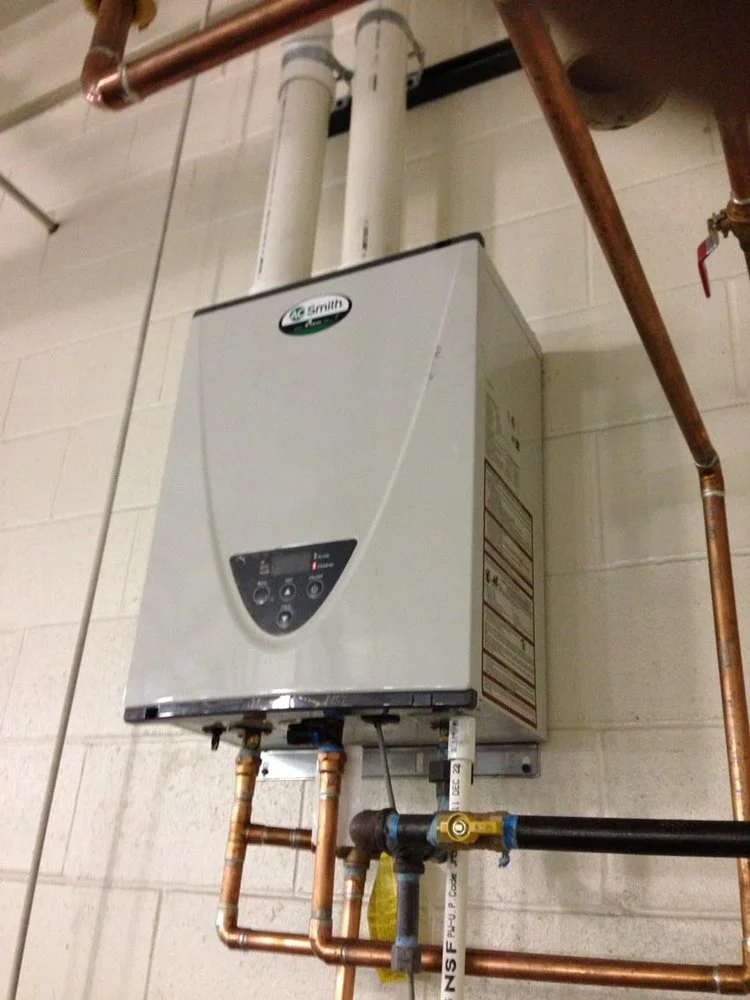
Bee Cave might be the most natural tankless market in Texas: big households with real simultaneous demand, owners planning to stay long enough to collect the decade math, garages and mechanical rooms with wall space to spare — and the one catch that keeps the whole decision honest, water hard enough to fossilize a heat exchanger on schedule. The corridor's conversions succeed or fail on two conversations most quotes skip: the gas math and the water math. Here's who has both conversations properly in 2026, what the project really costs, and the two-tank consolidation question that makes Bee Cave conversions their own discipline.
This is editorial research, not advertising: no company paid to appear here, and none were contacted for placement. Beaver A.C. & Plumbing is a referral service, not a contractor, so we're deliberately unranked and excluded. Ratings drift week to week, so we describe durable reputations rather than quoting stars that stale by the month. Verify current reviews and licenses before hiring anyone — including anyone we match you with.
The Lake Travis-area shop whose reviews specifically and repeatedly praise its tankless work — the focused local practice for the corridor's signature project, with the softener conversation built in rather than bolted on.
The treatment-first specialist across the west metro. For tankless in this water, a shop whose identity is water quality is making the right first argument before the unit is even chosen.
The RMP-owned corridor veteran — floor plans known, relationships standing, and the trusted-local option for households that want the conversion handled by the same shop that'll service it for a decade.
The walkthrough-style dual-trade outfit, which suits tankless perfectly: a project full of invisible decisions (gas sizing, vent routing, valve placement) benefits enormously from a tech who narrates and shows the work.
Same-day posture across Bee Cave–Lakeway–SW Austin with water heaters in the core lineup — the responsiveness pick when the old tank has already forced the timeline.
The metro heavyweight (4.7-caliber, thousands of reviews) with the multi-trade bench for conversions that grow — electrical outlets in old closets, condensate through finished space, recirc retrofits on big plans. Fleet capacity, one crew, several licenses.
Family-operated and Lakeway-based with the corridor in its daily map — the second local-relationship option, keeping routine conversions off the metro dispatch queue entirely.
| Company | Focus | Known for | Service area |
|---|---|---|---|
| Proverbs Plumbing | Heaters, tankless & softeners | Reviewer-praised tankless work | Lakeway & Lake Travis area |
| Cold Is On The Right | Heaters & softeners | Treatment-first projects | Austin & west metro |
| Lakeway Plumbing | Full-service residential | RMP-owned local veteran | Lakeway, Bee Cave, Westlake, Spicewood |
| Air & Plumbing Today | HVAC + plumbing | Walkthrough-style service | Austin metro incl. Lakeway |
| Proficient Plumbing Solutions | Repairs, heaters, emergency | Same-day availability | Bee Cave, Lakeway & SW Austin |
| Stan's | Full-service multi-trade | 4.7/5, thousands of reviews | Greater Austin metro |
| Neighborhood Plumbing and Drain | Full-service & drains | Family-operated, Lakeway-based | Lakeway, Bee Cave, Spicewood, SW metro |
Tell us your current setup — one tank or two, gas or electric. Beaver matches Bee Cave homeowners with a licensed, vetted tankless installer — free, full conversion price quoted before any work starts.
The corridor's floor plans commonly run two water heaters, which turns the conversion into a design decision most markets never face. Consolidate to one larger unit when the plumbing runs converge sensibly: one gas line, one vent, one service point, paired with recirculation to cover the far taps. Run two smaller units when the house splits into genuine wings — shorter hot-water runs, redundancy (one shower always works), and no single point of failure, at the cost of doubled venting and service. The tell that you're talking to the right installer: they walk your mechanical layout before arguing either way, and their quote explains the choice rather than defaulting to whatever's on the truck. Either path, sized to simultaneous demand — the corridor's multi-shower mornings are exactly what undersized units fail at — not square footage.
The conversion range — commonly $3,500–$6,500+ per unit — is driven by gas-line upsizing (whole-home tankless draws several times a tank's BTUs, sometimes back to the meter), venting with real termination rules, condensate routing on condensing units, and the outlet the old heater closet never had. And the standing corridor clause: treatment is half the project. This water chokes exchangers, warranty terms effectively assume you've addressed it, and the honest shops raise the softener unprompted — the single best competence tell on this page. Isolation valves at every unit (descaling becomes a 45-minute service, not a project) and annual descale service complete the ownership plan. Priced together, tankless-plus-treatment still wins the corridor's decade math comfortably — the two-tank house most of all, since it's retiring two future tank replacements at once.
Three Bee Cave wrinkles the fluent bidders raise unprompted. Vent aesthetics and HOA sightlines: tankless terminations exit walls, and in covenant country the exit wall is occasionally a negotiation — crews that work these subdivisions route accordingly on the first try. Attic and upstairs closets: where the old tank lived overhead, the conversion inherits the drain-pan-and-ceiling conversation; sometimes the right move is relocating the unit to the garage wall while the plumbing is open, and the quote should at least price the option. Static pressure: hillside lots run high, and a conversion visit is the natural moment for the PRV-and-expansion check — a $300 pressure fix protects a $5,000 install and every fixture downstream. None of these are upsells; all of them are the difference between a quote for the job and a quote for your house.
Timing and incentives, briefly: conversions book easiest in the shoulder seasons (nobody's tankless dream survives contact with a plumber's August emergency board), and efficiency incentives shift yearly — condensing units and heat-pump alternatives both cycle through programs. Ask all three bidders what currently applies; the one who answers in numbers is the one whose other knowledge is current too.
A proper conversion is a full day per unit: gas run and pressure-tested, unit mounted with service clearance, vent routed to spec, condensate neutralized where required, valves installed, system fired and flow-tested at multiple fixtures, temperature demonstrated, permit and registration in hand. Recirculation deserves its quote alongside — on the corridor's big single-story spreads, the far-bathroom wait is a daily-life fix worth more than any spec-sheet number; schedule- or demand-based operation keeps it from refunding your efficiency gains. The honest exceptions: healthy existing tanks on tight budgets (the like-for-like swap is defensible), all-electric homes without panel headroom (the heat-pump water heater usually wins — see the water heater guide), and near-term sellers, whose payback decade belongs to the buyer. Everyone else: three matched quotes, the gas math demanded, the water priced in — or one form to Beaver and a licensed, vetted installer with the full number already in writing.