
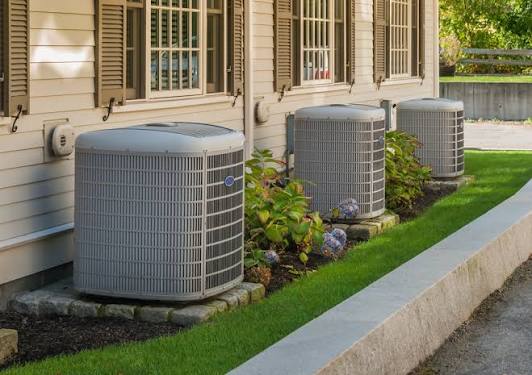
The corridor asks the AC lifespan question in the plural — how long do the units last, two or three per house, installed the same construction year and aging on divergent clocks — and the answer shapes five-figure planning: which system exits first (the west one, almost always), when the fleet's replacement sequence should start, and how the maintenance multiplier compounds across multiple contracts. The honest numbers, the corridor's fleet strategy, and the exits planned like the assets they are — all below.
The base ranges hold — 10–14 maintained years, 8–12 neglected — with the corridor's amendments: the west-zone discount (the system serving the view glass runs the fleet's hardest hours and typically exits 1–2 years early — its calendar is the household's planning anchor), the attic tax (handlers and ducts over three-car garages aging at the thermal margin), and the size factor (the corridor's 4–5 ton equipment carrying bigger loads through the same duty cycle, with install quality's echo — the commissioning the guide sermonizes — mattering proportionally more). Component clocks run the regional standard: capacitors at 5–8 (the west unit's first, reliably), fan motors 8–12, compressors defining each system's own ending. The fleet's install-year clustering is the corridor's plot twist: systems born together don't die together, but they do start the conversation together — usually in year eleven, usually via the west unit.
Years 0–5: warranty era — problems are install confessions, pursued under coverage. Years 5–9: normal metabolism — the capacitor tier, single small repairs, the $150–$350 lane, no math required. Years 10–12: the decision decade — efficiency slides, motor tier arrivals, first refrigerant conversations, every repair running the $5,000 rule before approval. Years 12+: borrowed time — compressor-adjacent anything is a replacement conversation, the 2026 refrigerant transition tightening the case annually. The corridor's convergence reading runs per unit but benefits from the fleet lens: the two-symptom test (annual repairs plus sliding performance) starts one system's clock, while pattern symptoms across siblings — the shared install year confessing — start the sequencing conversation, and the relationship shop holding all three baselines reads both in one visit.
Beaver matches Bee Cave homeowners with a licensed, vetted pro for the fleet assessment — free, price quoted before any work.
The 3–5 year lifespan spread between maintained and neglected applies per system, which is the corridor's whole argument: across a three-unit fleet, the twice-yearly program defers multiple five-figure replacements by multiple years — the compounding that makes the package-priced maintenance plan the rare contract that sells itself on arithmetic. The visits' fleet dividends stack: documented baselines per unit (decline read against history, not vibes), the west system's harder wear caught on its faster clock, and the shared-vintage pattern diagnostics that solo-system homes never get. The alternative's math is equally clear and worse: emergency-only care across three systems is a subscription to serial Augusts, billed at triage rates, with the replacements arriving unplanned and clustered. The corridor buys the plan; the plan buys the calendar.
The parts itemize on regional schedules — capacitors 5–8 corridor years ($150–$300, the west unit collecting first), contactors similar, fan motors 8–12 ($300–$700), blowers likewise ($400–$800), coils 10–15, compressors defining the endings — and the tier logic holds: first-tier repairs are metabolism, second-tier are messages, third-tier are conclusions. The false-extender file transfers intact: hard-start kits as bridges not strategies, top-off subscriptions with compressor-priced cancellation fees, and the additive tier treating owner anxiety at equipment expense. The corridor's scale just multiplies the stakes — three systems' worth of bridges and subscriptions is a replacement budget spent avoiding replacements.
And the closing arithmetic, stated once: a three-system corridor home carries roughly $20,000–$35,000 of installed cooling on staggered clocks — an asset class, managed or unmanaged. The maintained fleet spends ~$500 yearly and replaces on schedule; the neglected one spends less annually and pays Augusts. Every table in the cost guide is downstream of that choice; make it once, calendar it, and the fleet behaves.
The corridor's other compressor deserves its cameo: pool heat pumps and variable-speed pumps age on adjacent clocks under the same sun, and the fleet mindset extends naturally — install dates registered, surge protection shared, the annual service stacked onto the HVAC calendar's shoulder-season visits. The property that manages its compressors as one portfolio (house, casita, pool) buys its replacements on schedule across the board; the one that doesn't meets them in clusters, usually in June. Portfolio thinking, as ever, is the corridor's home-ownership superpower — the equipment just keeps proving it.
Real-estate coda: corridor listings carry their fleets' birthdays whether disclosed or decoded — the buyer weights three install dates as three line items, the seller picks the replace-or-credit fork like an adult, and the option-period failure of the "great shape" 13-year-old remains the worst outcome available to both. The inspection's HVAC hour, per system, stays the cheapest leverage in the transaction.
The corridor's outbuilding tier ages on its own gentler clock — mini-splits running 15–20 years with basic care, their smaller loads and inverter design outlasting the main fleet — with two caveats: the washable filters actually washed (the frost guide's standing confession) and the condensate paths maintained. The registry habit serves the whole property: every head and handler's install date in one note, the fleet's calendar visible at a glance, and the systems census priced before any purchase or sale. Data plates and serial decoders settle the birthdays; five minutes of registry beats a decade of guessing.
The fleet's endgame is a scheduling art: replace by convergence order — the west unit's earlier exit leading, each successor's R-454B performance informing the next round's choices — in shoulder seasons, with the October multi-unit package as the exception when the whole fleet reads 14+ (mobilization amortized, leverage consolidated). The anti-patterns, named: the "replace them all while we're here" pitch on healthy siblings (a sales line, not a strategy), and the serial-emergency default (three Augusts, three premiums, zero leverage). The buyer's corollary scales too — the corridor listing with three 12-year-old systems carries a five-figure line item times three, priced at the negotiation table or discovered after closing. The short version: corridor systems live 10–14 maintained years each, the west unit calls the sequence, the per-system visits buy the top of every range, and the household that schedules the exits owns the calendar the emergencies would otherwise own. Fleet age is fleet runtime; run it like the portfolio it is.